Our Work
SARD's work is organised into four programme brackets: Afforestation, Water Conservation, Community Development, and Model Villages. Each bracket combines practical field work with community participation and local handover.
Afforestation
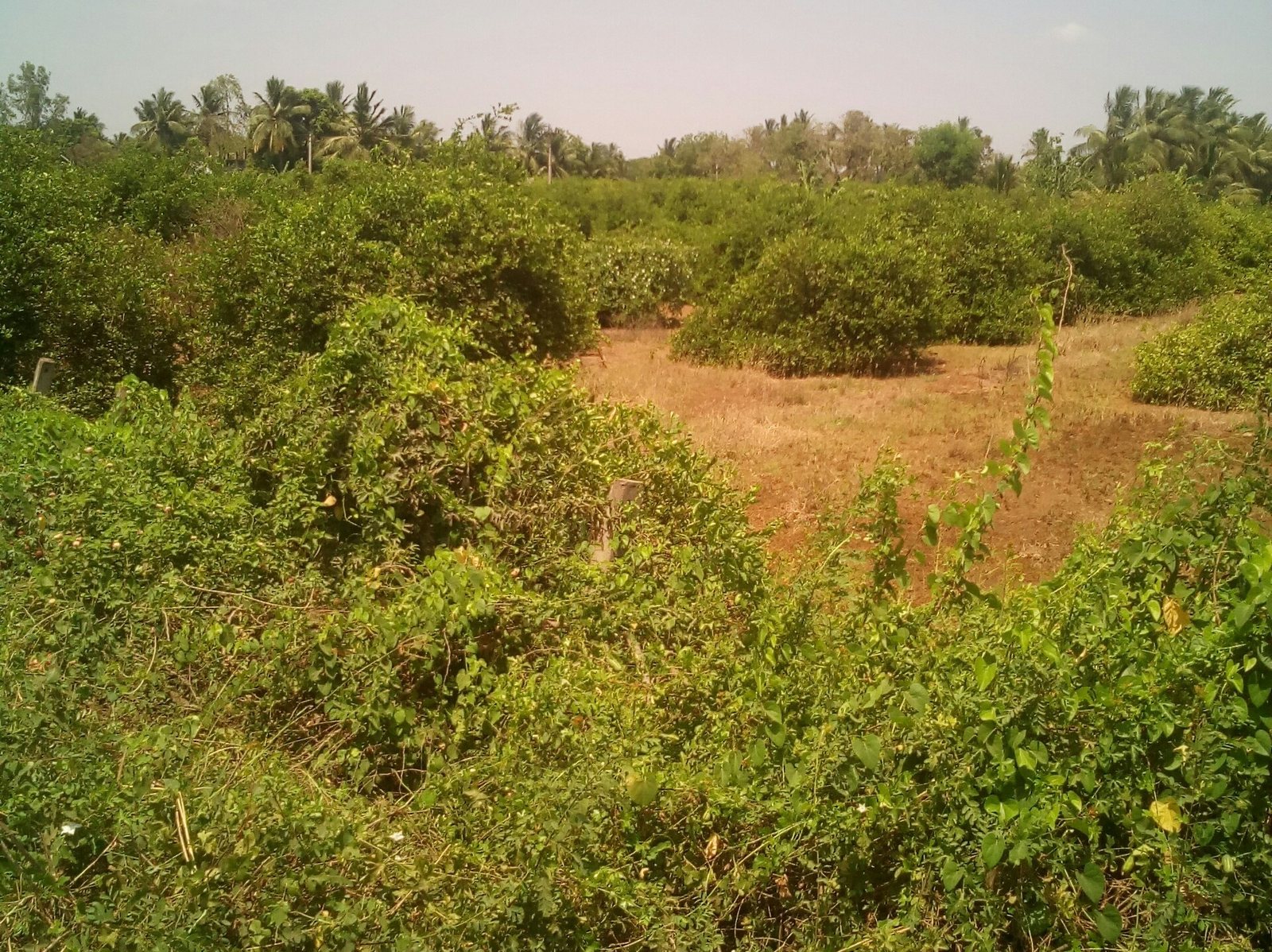
SARD's afforestation work focuses on practical greenery that can survive after planting day: biodiversity, avenue plantation, community spaces, and local stewardship.
The work includes planting and green cover restoration on degraded common land, public spaces, road corridors, tank bunds, and community areas where vegetation can reduce erosion, provide shade, and strengthen local climate resilience.
The programme includes biodiversity-oriented planting, avenue plantation, greenery development, and community stewardship so saplings are not treated as one-time assets but as living infrastructure.
Planting plans are adapted to site conditions, species suitability, water availability, and the ability of local residents or institutions to maintain the plants over time.
Water Conservation
Water conservation work improves local water security through harvesting, storage, recharge, restoration, and efficient use.
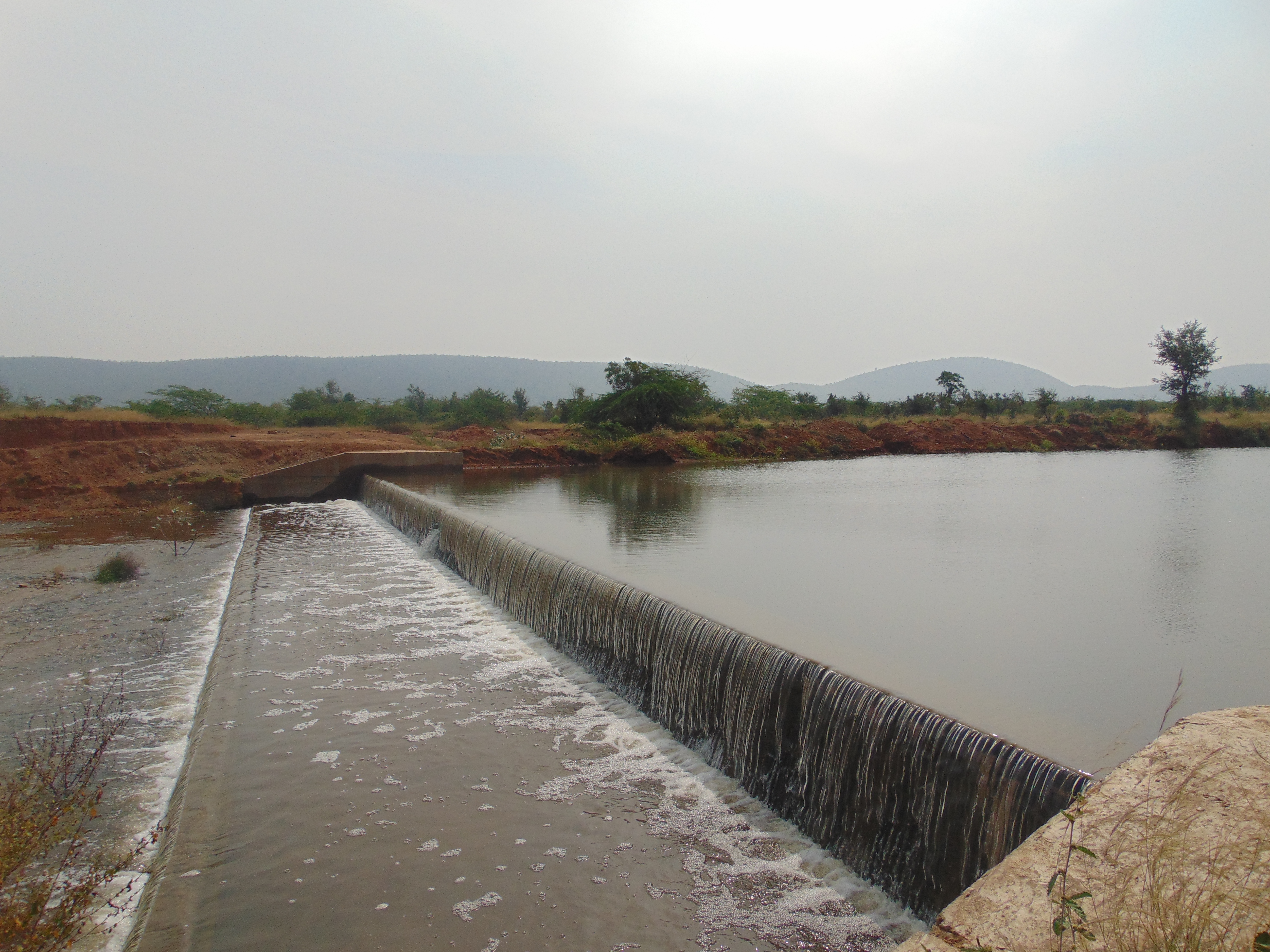
SARD supports existing village tanks and check-dam systems through desiltation, bund strengthening, minor repairs, recharge improvement, roof rainwater harvesting systems, farm ponds, watershed development, water-efficient agriculture, and water management technologies.
The goal is to slow runoff, improve groundwater recharge, restore community water bodies, and help farmers and households use water more efficiently through practical local systems that can be maintained by the community.
Each intervention is scoped to the site: an existing tank, check-dam improvement, harvesting system, or water management technology is selected only after local conditions, maintenance needs, and community ownership are clear.
Community Development
Community Development strengthens the everyday systems that improve rural quality of life, dignity, health, and livelihoods.
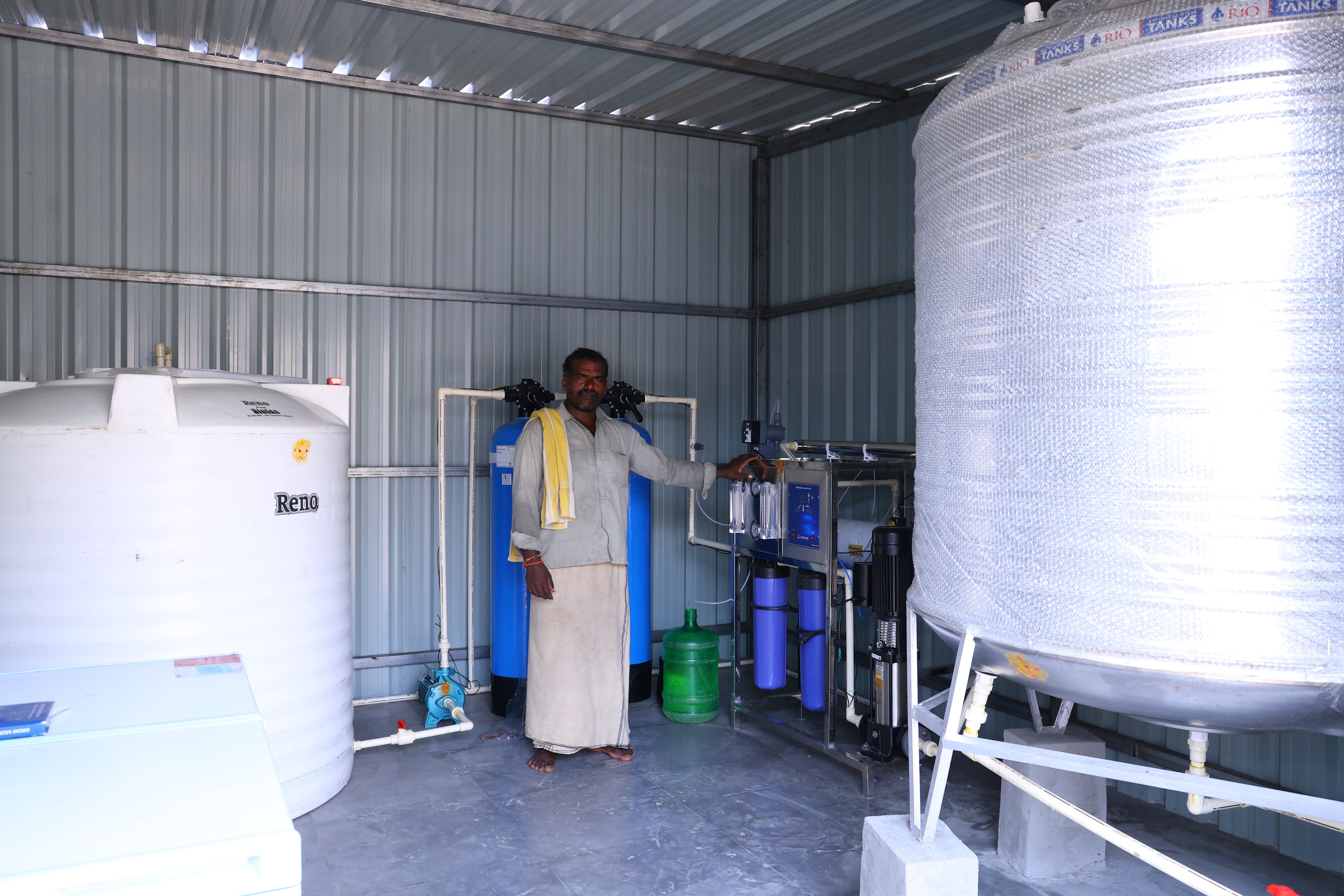
This bracket includes RO plants for safe drinking water, awareness camps, women empowerment, community health, livelihood and agriculture, child labour elimination, infrastructure, skill development, WASH initiatives, and convergence works.
RO and safe-water work is treated as an operating service, not just an installation: need is verified locally, water quality is checked where applicable, caretakers are oriented, and upkeep is discussed at handover.
The wider work is practical and community-facing: improve access to safe services, build skills, connect people to livelihood pathways, and coordinate with public systems wherever convergence can increase impact.
Women empowerment is treated as part of community development because stronger participation, agency, and local leadership are central to resilient village systems.
Model Villages
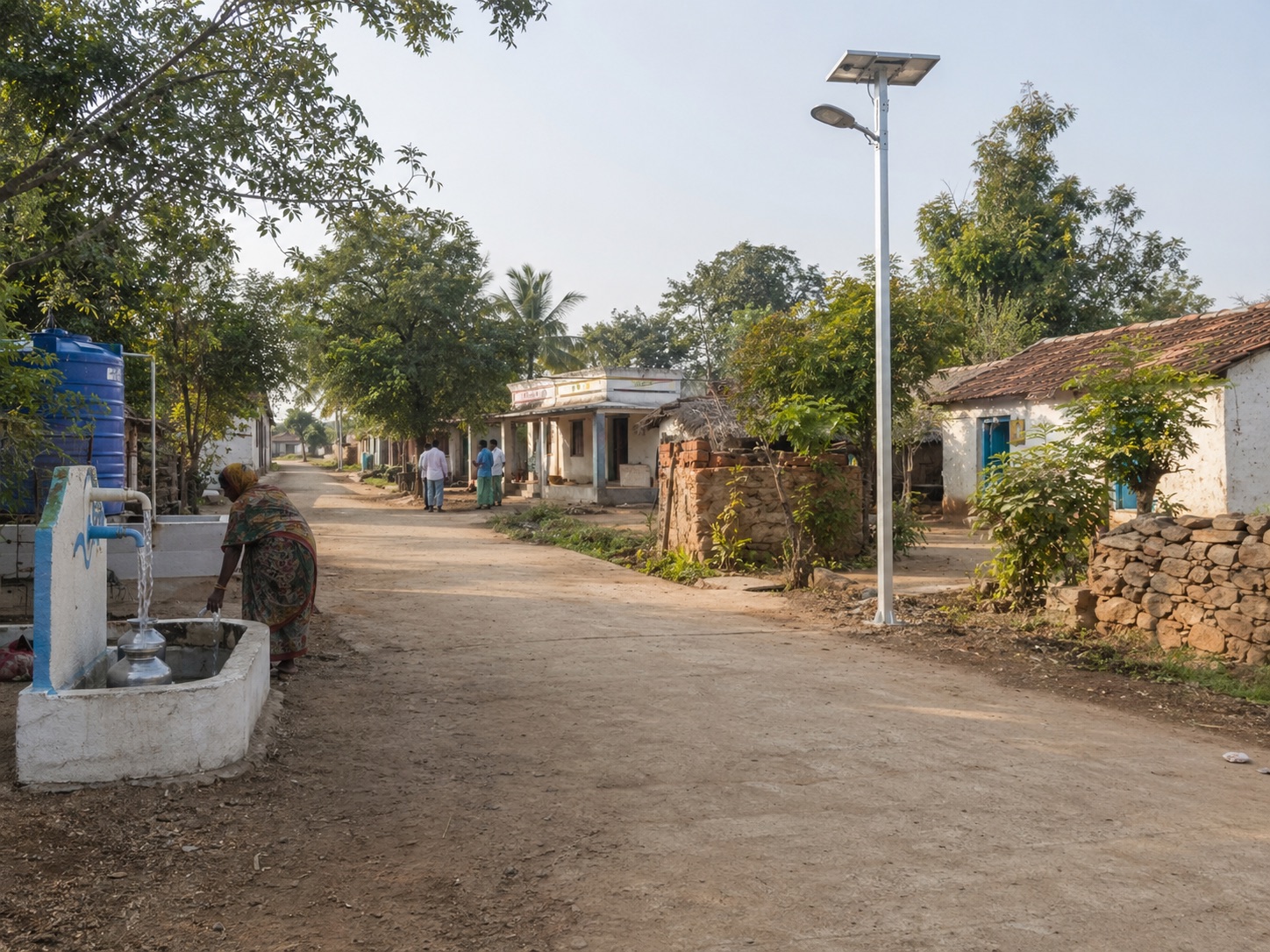
SARD's model village concept grows from practical work already done in separate areas: RO plants, water-asset strengthening, awareness camps, afforestation, and community spaces.
The next step is to plan these interventions together at the village level. Instead of treating each need separately, the model village approach looks at the full village system: natural resources, public infrastructure, livelihoods, safe water, sanitation, health, skills, and community institutions.
The model is not a claim that every intervention is needed in every place. It is a planning framework for identifying priority gaps and sequencing the right work with the community, in line with the convergence approach encouraged by rural development agencies such as NABARD.
Successful model village work should leave behind stronger local capacity, better-maintained infrastructure, and a clearer pathway for continued development.
Geography
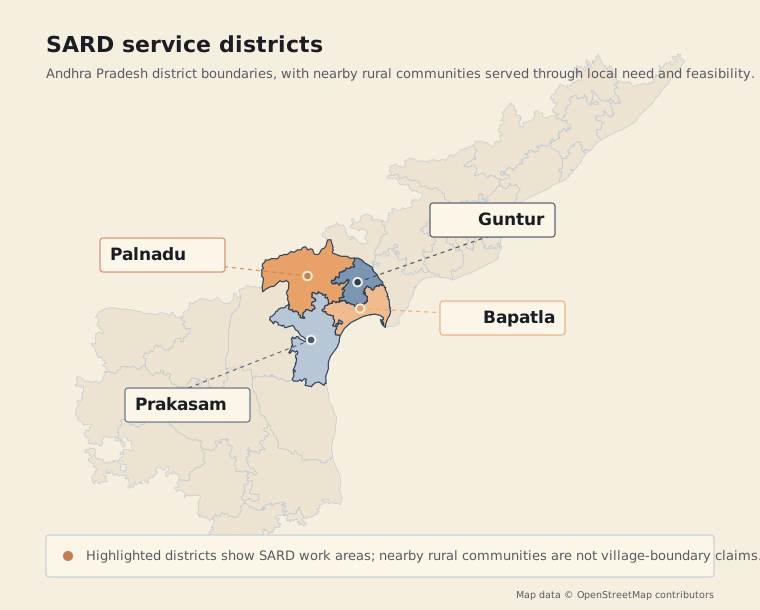
Districts and nearby rural communities
SARD works across andhra pradesh. Programme priorities are selected through local need, field feasibility, community participation, and the ability to maintain the work after handover.