Sustainable Rural Development for Resilient Communities
SARD advances afforestation, water conservation, community development, and model village work across rural Andhra Pradesh — strengthening ecosystems, livelihoods, and village infrastructure for long-term community resilience.
What We Do
Four programme brackets. One rural development mission.
SARD works across environment, water, community systems, and integrated village development. Work that began as separate interventions can be planned together so rural communities build self-reliant and environmentally responsible futures.
Afforestation
Survival-focused planting, avenue greenery, and community spaces planned around watering, local stewardship, and ecological balance.
WaterWater Conservation
Existing tank and check-dam support through desiltation, bund strengthening, minor repairs, recharge improvement, and efficient water use.
CommunityCommunity Development
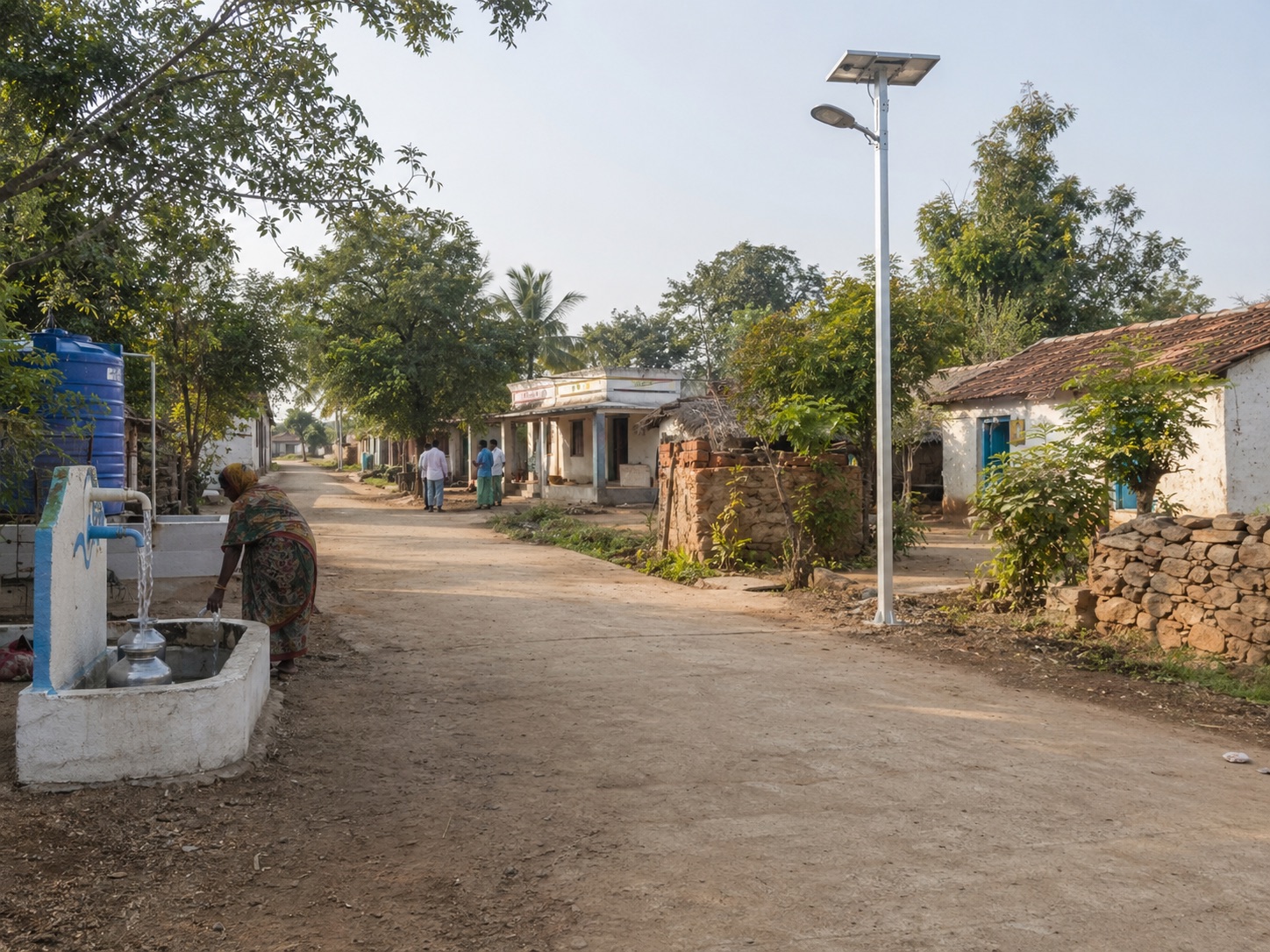
RO plants, safe drinking water support, awareness camps, WASH, livelihoods, skills, and practical services with local handover.
Integrated ModelModel Villages
Village-level plans that integrate proven work such as RO plants, water-asset strengthening, awareness camps, greenery, and community spaces.
Geography
Districts and rural communities served
SARD works across andhra pradesh where water stress, livelihood vulnerability, ecological degradation, and infrastructure gaps affect daily life.
The site-specific work changes from place to place, but the approach remains consistent: understand local needs, coordinate with communities, and deliver practical interventions that can be maintained locally.
Supported by ITA
SARD's current programme is supported by ITA. Each project — whether in afforestation, water conservation, community development, or model village work — is planned, scoped, executed, documented, and handed over by SARD's field team under the partnership.
SARD works through modest, responsibly managed project budgets and is ready to take on harder rehabilitation work in phases, with clear scope, reporting, and local ownership built in.
SARD is registered under Section 12A and 80G of the Income Tax Act. CSR contributions under the Companies Act 2013 are applicable to SARD's programme activities.